
Geneva Prize for Human Rights in Psychiatry 2024
The jury for the Geneva Prize 2024 was comprised of the following members: Samia Hurst; Danuta Wasserman; Fulvia Rota (excused); Robert Roth; Jean Zermatten; Marianne Kastrup (chair)
The jury met on August 23, 2024, to evaluate the candidates and to select the recipient of the Geneva Prize utilizing the following criteria:
- The application should be focused on the defense of human rights in psychiatry – not human rights in general
- The application should demonstrate sustained action and productivity over time
- The application should show immense personal and professional commitment
- The application should be applied to an exceptional context
- The candidate must not have received a high number of previous awards.
Geneva Prize:
The jury decided unanimously to award the Geneva Prize 2024 to Valentina Hristakeva:
Valentina Hristakeva was born in Bulgaria and received a BC of Social Sciences. In 1998 she joined the Association of Reformers in Psychiatry and subsequently had several positions related to the Global Initiative of Psychiatry in Sofia, until she became the Executive Director of the Global Initiative in Sofia in 2002. Ms. Hristakeva has created an integrated user-focused community service and a model rights-based mental health service complex.
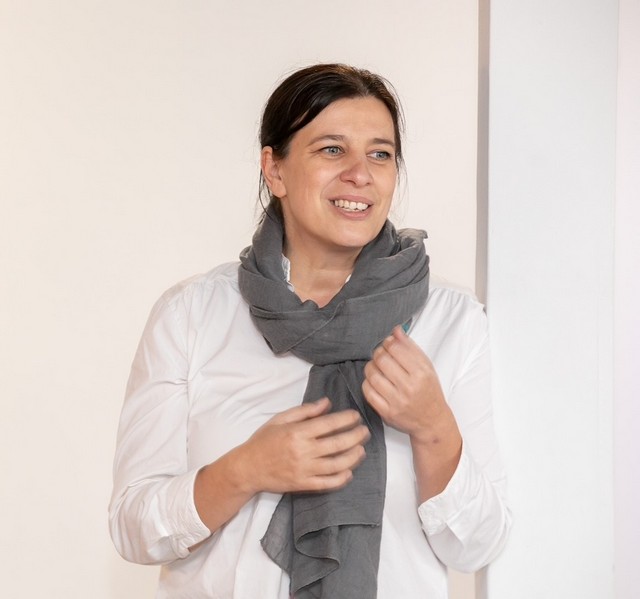
The range of integrated programs far exceeds the conventional, and includes an information-line, rights-based advocacy and mediation, close working with the justice system, social skills training, a recovery college, job training with its own social enterprises, day-care center, and educational and anti-stigma programs. She has also played a pivotal role in the introduction of changes at the Health Act in the area of mental health which guarantees the rights of persons with disabilities and serious mental health problems in Bulgaria. Her work as an advocate for one of the most vulnerable groups in society has taken place in a society with a need for modernization of psychiatry, and it has had important impact on the daily practice in mental health care. Ms. Hristakeva has for decades fought for deinstitutionalizing and transforming institutional care, for empowering users, carers and professionals. The emphasis of the NGO is no longer on illness or deficiency, but on people themselves, on their resilience as relational, contextual beings. Further, she has played a pivotal role in policy development and advocacy, as well as in implementing anti-stigma and public awareness campaigns for people with mental illness who due to the specificity of their mental condition or life circumstances have been unable to reach the system of social and health care and receive adequate and quality care and support.
In the light of these achievements, the jury finds that Valentina Hristakeva is an excellent recipient of the Geneva Prize for her sustainable work and her remarkable achievements.
Award winner Valentina Hristakeva’s speech :
Ladies and Gentlemen,
Receiving the Geneva Prize for Human Rights in Psychiatry stirs within me mixed emotions. On one hand, I feel deep pride — especially toward my team in Bulgaria — because without them, the work that has led to this recognition would not have been possible.
This award does not belong to me alone; it belongs to all of us.
It is also profoundly symbolic to receive this prize exactly 25 years after it was first awarded, to the Geneva Initiative on Psychiatry.
You may not know that this organization today bears a new name — the Federation Global Initiative on Psychiatry (FGIP) — of which my organization is a also proud member.
In this sense, this award is also for them — for the entire GIP family, which has worked tirelessly for decades to humanize and modernize mental health care across Central and Eastern Europe, the former Soviet Union, and far beyond.
Over the years, the Federation has made a tremendous impact. Much of what we see today in our region would not exist without its persistence.
The FGIP stands as a shining example of what civil society can achieve through integrity, determination, and patient, year-by-year effort — often against all odds.
This award belongs to all who believe that psychiatry and human rights are not in conflict, but deeply intertwined. True quality of care is impossible without respect for human dignity.
And yet, even as we celebrate this moment, we cannot close our eyes to the reality surrounding us.
This year, the Federation Global Initiative on Psychiatry celebrates its 45th anniversary — a milestone that is both inspiring and sobering.
We are witnessing times when civil society is under immense pressure, and the political climate — not only in Europe but across the world — is changing rapidly and alarmingly.
Human rights are no longer seen as core values. For many governments, they have become inconvenient — even threatening.
As a result, in more and more countries, human rights are being reduced to hollow words, stripped of substance.
The political abuse of psychiatry has once again become a method of repression — in Russia, in China, in Iran… and in isolated cases elsewhere.
This is particularly painful for us, because our organization — the FGIP — was founded in 1980 precisely to fight such abuses.
It is deeply troubling that 45 years later, this struggle has once again become necessary.
In Bulgaria, reports from the CPT and the National Preventive Mechanism paint a similar picture: chronic understaffing, poor conditions, and limited access to therapy.
These are not isolated incidents — they are systemic issues, seen in many parts of the world.
They affect our work, they affect people with lived experience, and they affect all of us.
What we have built through years of effort is now being challenged — even undone.
Unfreedom is again just around the corner.
And when institutions fail to protect rights, they fail to provide care itself.
That must change.
We do not need new promises — we need consistent standards, professionalism, and accountability at every level of the system.
Change begins with the recognition that mental health care grounded in human rights is not an ideal — it is a necessity.
A rights-based system sees every person as an individual with potential, not as a problem to be managed.
It focuses on recovery, dignity, and human connection — supported by professionals who are valued and empowered, and by environments that promote safety, autonomy, and respect for all.
This award is not a conclusion, but a call to action — to continue our mission and to insist on change.
This year, we launched the Circle of Friends, inviting people to join us and support our efforts for human rights and against the political abuse of psychiatry.
We need your support.
We need your voices — to amplify those that are not being heard.
Only through collective effort can we stop this negative spiral and create a world where human rights once again stand at the heart of all that we think and all that we do.
Thank you.
Diploma:
The jury decided unanimously to award a Diploma to the candidates Moussa Ba and Sohail Ali for their outstanding work and achievements in establishing the UN Dept. Safety and Security Critical Incident Stress Management Section (UN-CISMS) that has the responsibility of protecting the mental health of the approx. 150,000 UN humanitarian relief workers deployed in myriad areas such as war zones, natural disaster zones, or areas affected by terrorism.
Moussa Ba was born in Senegal, received a Ph.D. and is a psychiatrist. Moussa Ba is one of the 10 Experts on the task force that was hired by the UN Department of Social Affairs to design the World Plan of Action for Disabled People for the years 2000 and beyond, and he has been the Chief of the UN Dept. Safety and Security Critical Incident Stress Management Section (UN-CISMS) from 2005 till his retirement 2021.
Sohail Ali was born in Pakistan, is a psychiatrist, and has previously worked at the WHO as team leader for the clinicians serving frontline workers. Since 2007 he has worked for UN in various capacities. From 2022 he has been the chief of the UN-CISMS programs.
Together, the two have developed resilience building programs and mental health support services for frontline workers in all parts of the world. They have coordinated the management of stress throughout the UN system, and today the organization has grown to a team of close to 200 psychiatrists and psychologists deployed to protect the mental health of the approximately 150,000 United Nations Humanitarian Relief Workers working in war zones, natural disaster zones, and areas affected by organized violence and terrorism. Their pioneering work with frontline workers enables the assistance provided by such frontline workers to millions of persons in affected areas. Together they have not only provided high quality mental health support services for frontline workers but further championed the protection of the rights of persons with mental disorders in displaced scenarios where vulnerability is heightened, and as such they have fought for the human rights in psychiatry.
The jury found that in the light of their achievements, and to celebrate their pivotal role in the establishment of the organization UN-CISMS, they greatly deserve the recognition of a Diploma for their sustained and impactful work over decades.

